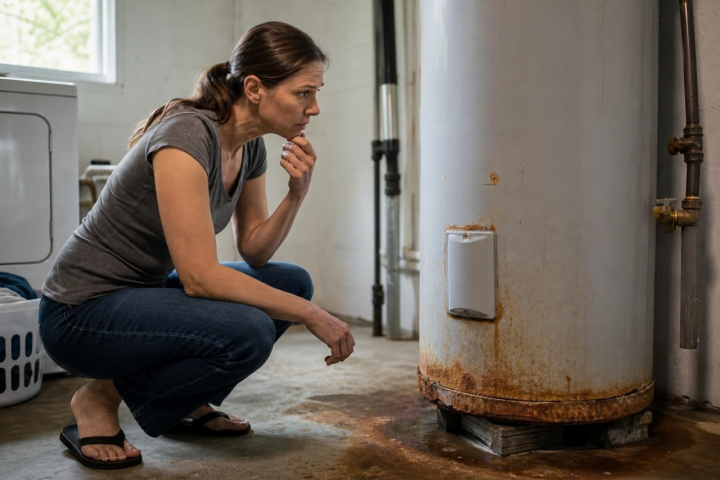
A failing water heater rarely announces itself with a single dramatic event. Instead, the warning signs tend to appear gradually: a lukewarm shower here, a strange rumble there, or a faint rusty tinge in the water. Most homeowners do not think about their water heater until something goes wrong, but catching problems early can save hundreds or even thousands of dollars. Whether your unit is a traditional tank model or a tankless system, understanding the signals of decline is essential. Recognizing the signs that your water heater needs repair or replacement puts you in a position to act before a small issue becomes a flooded basement or a complete loss of hot water during the coldest week of the year. The five indicators outlined below will help you assess your system’s health and determine the right course of action.
Understanding Your Water Heater’s Lifespan and Performance
Most conventional tank water heaters are designed to last between 8 and 12 years, while tankless models can operate effectively for 15 to 20 years with proper maintenance. These figures are averages, not guarantees. A unit installed in a home with hard water, for example, may degrade faster due to mineral accumulation, while a well-maintained system in a mild climate could exceed expectations.
Performance tends to decline gradually rather than all at once. You might notice that it takes longer to recover hot water after a shower, or that the tank struggles to keep up during periods of high demand. These are early indicators that internal components are wearing down.
Annual maintenance, including flushing the tank and inspecting the anode rod, can extend the life of your system by several years. If your water heater is approaching the end of its expected lifespan and you have not kept up with routine service, the likelihood of a failure increases substantially. Knowing the age of your unit is one of the most important pieces of information you can have when evaluating whether a repair makes financial sense.
Inconsistent Temperatures and Fluctuating Hot Water
One of the earliest and most noticeable signs of trouble is water that cannot hold a steady temperature. You step into the shower and the water shifts from comfortably warm to lukewarm or cold without any adjustment to the handle. This inconsistency often points to problems inside the tank that affect how efficiently water is heated and delivered.
Temperature fluctuations are not just an inconvenience. They can indicate mechanical failures that, left unaddressed, will worsen over time. Two of the most common culprits are sediment buildup and component failure.
Sediment Buildup and Tank Efficiency
Over time, minerals dissolved in your water supply, particularly calcium and magnesium, settle at the bottom of the tank. This sediment layer acts as an insulator between the burner or heating element and the water itself. The heater has to work harder and run longer to achieve the same temperature, which leads to uneven heating and higher energy bills.
In severe cases, the sediment hardens into a thick crust that traps pockets of water beneath it. When those pockets boil, they produce popping or crackling sounds. Flushing the tank annually can prevent this problem, but once the buildup becomes significant, professional cleaning or tank replacement may be necessary.
Broken Dip Tubes or Heating Elements
The dip tube directs cold incoming water to the bottom of the tank, where it can be heated before rising to the top for distribution. If this tube cracks or deteriorates, cold water mixes with the hot water near the top of the tank, resulting in inconsistent output at your faucets.
Electric water heaters rely on upper and lower heating elements. If either element fails, the unit may produce some hot water but not enough to meet demand. A plumber can test these elements with a multimeter and replace them individually, which is often a cost-effective repair for units that are otherwise in good condition.
Discolored Water and Metallic Odors
Turning on a hot water tap and seeing brown, orange, or rust-colored water is alarming, and for good reason. Discolored water typically indicates that metal components inside the tank are corroding. A metallic taste or sulfurous smell accompanying the discoloration confirms that something is breaking down internally.
It is worth distinguishing between a temporary issue and an ongoing one. If you have been away from home for a week and the first draw of water looks discolored, that may simply be stagnation. But if the discoloration persists after running the tap for several minutes, the problem is likely inside the heater itself.
Internal Tank Corrosion and Rust
Steel tanks are lined with glass or porcelain to prevent direct contact between water and metal. Over the years, this lining can crack, exposing the steel beneath to constant moisture. Once corrosion begins, it accelerates. Rust particles flake off into the water supply, producing the reddish-brown color you see at the tap.
A corroded tank cannot be repaired. If rust has penetrated the tank walls, replacement is the only option. Delaying this decision increases the risk of a tank rupture, which can release 40 to 80 gallons of water into your home in a matter of minutes.
Anode Rod Failure and Bacteria Growth
The anode rod is a sacrificial component designed to attract corrosive elements in the water so they attack the rod instead of the tank lining. Most anode rods are made of magnesium or aluminum and need to be inspected every two to three years. Once the rod is depleted, the tank itself becomes the target of corrosion.
A failing anode rod can also contribute to bacterial growth inside the tank, particularly in units set below 120 degrees Fahrenheit. Sulfate-reducing bacteria thrive in warm, low-oxygen environments and produce hydrogen sulfide gas, which gives the water a rotten-egg smell. Replacing the anode rod and raising the thermostat setting usually resolves this issue, but if the rod has been depleted for a long time, the tank may already be compromised.
Unusual Noises Coming from the Unit
A water heater should operate relatively quietly. If you start hearing banging, popping, rumbling, or whining sounds, something is wrong. The type of noise can help pinpoint the issue.
- Popping or crackling sounds typically result from sediment buildup at the bottom of the tank, as described earlier. Steam bubbles form beneath the hardened mineral layer and burst as they escape.
- Rumbling or low-frequency vibrations often indicate that the tank is working harder than it should to heat water through a thick sediment barrier.
- High-pitched whining in electric models may signal a failing heating element coated in scale.
- Banging or “water hammer” sounds can point to pressure issues in the plumbing system rather than the heater itself, but they still warrant professional evaluation.
Ignoring these sounds is a common mistake. They are your water heater’s way of signaling internal stress. A plumber can flush the tank, descale the elements, or identify pressure irregularities before they cause structural damage to the unit.
Visible Leaks and Moisture Around the Base
Water pooling around the base of your water heater is one of the most urgent warning signs. Even a small, slow drip can indicate a serious problem that will only get worse. Before assuming the worst, check the surrounding area for other sources of moisture: condensation on nearby pipes, a leaking pressure relief valve, or loose inlet and outlet connections.
If the leak is coming from the tank itself, it usually means the inner lining has failed and water is seeping through corroded spots. Tank leaks are not repairable. The metal has weakened to the point where patching is unreliable, and the risk of a full rupture is real.
Pressure relief valve leaks are a different matter. This valve is a safety device designed to release water if the temperature or pressure inside the tank exceeds safe levels. A dripping relief valve may simply need replacement, or it could indicate that the system is running at dangerously high pressure. Either way, a licensed plumber should inspect it promptly.
Do not ignore even minor moisture. Water damage to flooring, drywall, and structural components can cost far more than the water heater itself, and mold growth from undetected leaks creates health risks for your household.
Deciding Between Professional Repair and Full Replacement
Once you have identified that your water heater is showing signs of failure, the next question is whether to repair or replace it. This decision depends on several factors, and the right answer is not always the same for every household.
A straightforward rule of thumb: if the repair cost exceeds 50 percent of the price of a new unit, replacement is usually the better investment. But cost alone does not tell the full story.
Evaluating the Age Factor
A water heater that is 10 years old and needs a $400 repair is in a very different position than a 4-year-old unit with the same problem. Younger systems with isolated component failures, such as a thermostat, heating element, or anode rod, are strong candidates for repair. These fixes are relatively inexpensive and can extend the unit’s useful life by several more years.
Older units, especially those past the 10-year mark, are more likely to develop cascading problems. Fixing one issue today does not prevent the next failure six months from now. If your water heater is nearing the end of its expected lifespan, a proactive replacement gives you the chance to choose a new system on your own timeline rather than in an emergency.
Cost-Benefit Analysis of Energy Efficient Models
Modern water heaters are significantly more energy efficient than models manufactured even a decade ago. Heat pump water heaters, for instance, use roughly 60 percent less electricity than standard electric resistance models. The federal tax credits available through 2032 under the Inflation Reduction Act can offset a substantial portion of the upfront cost for qualifying high-efficiency units.
Tankless water heaters offer another option, providing hot water on demand without the standby energy losses associated with maintaining a full tank at temperature. While the initial investment is higher, the long-term savings on utility bills and the extended lifespan of 15 to 20 years make these systems worth serious consideration.
Running the numbers for your specific household, including local energy rates, water usage patterns, and available rebates, will clarify whether upgrading to a more efficient model pays for itself within a reasonable timeframe.
Making the Right Call for Your Home
A water heater that is failing will almost always tell you before it quits entirely. Inconsistent temperatures, discolored water, strange noises, and visible leaks are not minor annoyances to ignore. They are signals that your system needs professional attention.
If your unit is relatively young and the issue is isolated, a targeted repair can restore reliable performance. If it is aging, showing multiple symptoms, or leaking from the tank, replacement is the safer and more economical path forward. Either way, acting early prevents the kind of emergency that leads to water damage, disrupted daily routines, and rushed purchasing decisions.
Schedule an inspection with a licensed plumber if you have noticed any of the signs discussed here. A professional assessment takes the guesswork out of the equation and gives you clear options based on your unit’s actual condition. The cost of an inspection is minimal compared to the expense of a preventable failure.