Whitehouse Station sits in the heart of Hunterdon County, where New Jersey winters can push temperatures well below freezing for days or even weeks at a stretch. For homeowners in this area, frozen pipes represent one of the most common and costly winter plumbing emergencies. A single burst pipe can release hundreds of gallons of water per hour, causing thousands of dollars in structural damage before anyone notices. Understanding how to prevent frozen plumbing lines, recognize early warning signs, and respond to emergencies is essential for protecting your home through the coldest months. Whether your house dates back decades or was built within the last few years, the risk is real, and preparation makes all the difference. This guide covers the practical steps every Whitehouse Station homeowner should take before, during, and after a hard freeze.
Understanding the Risks of Whitehouse Station Winters
Hunterdon County regularly experiences stretches of single-digit temperatures between December and February. The National Weather Service has recorded multiple polar vortex events affecting central New Jersey in recent years, with overnight lows occasionally dropping below zero. These sustained cold snaps are exactly what cause pipes to freeze, especially in older homes with insufficient insulation.
Water expands by roughly 9% when it freezes. That expansion generates enormous pressure inside a closed pipe, sometimes exceeding 25,000 psi. The pipe does not always burst at the frozen point itself; instead, pressure builds between the ice blockage and a closed faucet, causing failure at the weakest joint or section.
Homes in Whitehouse Station face particular vulnerabilities. Many properties in the area were built in the mid-20th century, with plumbing routed through unheated crawl spaces, exterior walls, and uninsulated garages. Even newer construction can be at risk if builders cut corners on insulation around supply lines. Pipes serving exterior hose bibs, kitchen sinks on outside walls, and basement water heaters are the most frequent failure points during NJ winters.
The financial consequences are severe. The Insurance Institute for Business and Home Safety estimates that a single burst pipe incident costs an average of $5,000 or more in water damage, and that figure climbs quickly if the break goes undetected for hours.
Winterization Strategies to Prevent Frozen Pipes
Prevention is far less expensive than repair. A few targeted upgrades before winter arrives can dramatically reduce your risk of pipe failure during a deep freeze.
Insulating Vulnerable Plumbing Lines
Pipe insulation is one of the simplest and most cost-effective defenses against freezing. Foam pipe sleeves, available at any hardware store, slip over exposed water lines and provide a thermal barrier that slows heat loss. Focus on these areas first:
- Supply lines running through unheated crawl spaces or basements
- Pipes in exterior walls, particularly on the north-facing side of the home
- Water lines inside attached garages
- Any exposed plumbing near foundation vents or drafty areas
For pipes in especially cold zones, self-regulating heat tape or heat cables offer an additional layer of protection. These electric heating elements wrap around the pipe and activate automatically when temperatures drop. They are particularly useful for long runs of copper or PEX tubing in crawl spaces where insulation alone may not be sufficient.
Sealing air leaks around pipes where they penetrate exterior walls also helps. A can of expanding foam sealant around pipe entry points can eliminate cold air drafts that accelerate freezing.
Managing Outdoor Faucets and Sprinkler Systems
Exterior plumbing requires its own winterization routine. Before the first hard freeze, disconnect all garden hoses from outdoor spigots. A connected hose traps water in the faucet body and supply line, virtually guaranteeing a freeze.
If your home has frost-free hose bibs, confirm they are functioning correctly. These fixtures are designed to shut off water flow deep inside the wall, but they only work if the hose is disconnected. Standard hose bibs should be shut off using an interior valve, then opened outside to drain any remaining water.
Sprinkler and irrigation systems need professional blowout service before winter. Compressed air is used to purge all water from the lines, heads, and valves. Skipping this step risks cracked fittings and split supply lines underground, which are expensive to locate and repair in spring.
Indoor Habits to Maintain Pipe Safety During Deep Freezes
Even with proper insulation, extreme cold spells demand active attention to your home’s plumbing. A few simple indoor habits can prevent a freeze when temperatures plummet.
Keeping interior doors open throughout the house allows warm air to circulate into rooms with vulnerable pipes. Bathrooms and kitchens built against exterior walls benefit especially from this airflow. If you have cabinets under sinks on outside walls, leave the cabinet doors open overnight so heated air reaches the supply lines behind them.
Letting a thin stream of water run from faucets served by exposed pipes is another proven tactic. Moving water resists freezing far better than standing water. You do not need a heavy flow; a pencil-thin stream from both hot and cold lines is sufficient. Yes, it adds a small amount to your water bill, but the cost is negligible compared to repairing a burst pipe.
Thermostat management plays a critical role during winter nights. Set your thermostat no lower than 55 degrees Fahrenheit, even when you are away from home. Many homeowners make the mistake of dropping the heat dramatically while traveling for the holidays. A cold, empty house with no running water is the most common scenario for catastrophic pipe failure. If you will be away for more than a day or two during freezing weather, consider asking a neighbor to check on the house or install a smart thermostat with remote temperature monitoring and low-temperature alerts.
How to Identify and Safely Thaw Frozen Pipes
Catching a frozen pipe early, before it bursts, can save you from a major emergency. Knowing the warning signs and safe thawing techniques is critical.
Signs Your Pipes are Nearing a Freeze
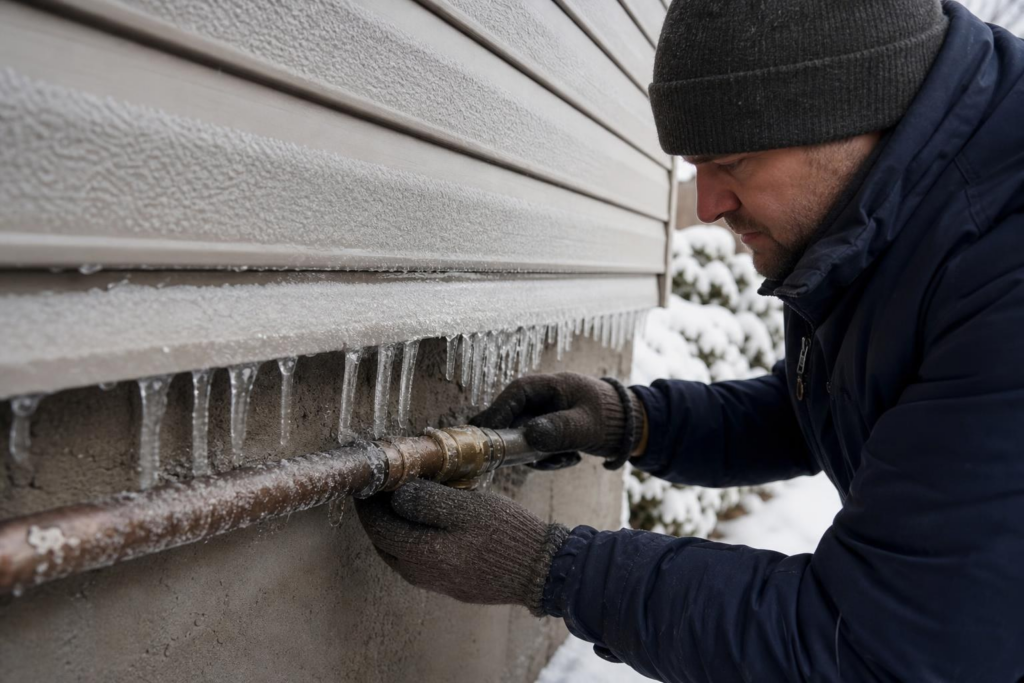
The most obvious indicator is reduced or absent water flow from a faucet. If you turn on a tap and only a trickle comes out during a cold snap, a frozen blockage is the likely cause. Frost visible on an exposed pipe is another clear signal.
Less obvious signs include unusual sounds. A gurgling or banging noise from your plumbing can indicate that ice is partially blocking the line and disrupting normal flow. Strange odors coming from a drain can also suggest a blockage, as frozen waste lines prevent sewer gases from venting properly.
Check the most vulnerable areas of your home first: crawl spaces, garages, and exterior walls. If you can see or touch the pipe, feel for sections that are noticeably colder than the surrounding area or that have a bulging appearance.
Safe Thawing Methods vs. Dangerous Risks
If you locate a frozen section of pipe that has not yet burst, you can attempt to thaw it carefully. Start by opening the faucet the pipe feeds so that melting water and steam can escape, which also reduces internal pressure.
Safe heat sources include a hair dryer, a portable space heater directed at the frozen area, warm towels wrapped around the pipe, or a heat lamp. Apply heat starting from the faucet side and work back toward the frozen section. This approach allows water to flow out as ice melts, rather than building pressure behind the blockage.
Never use an open flame, propane torch, or charcoal heater to thaw pipes. These create serious fire hazards and can damage the pipe itself, particularly plastic PEX or CPVC lines. Carbon monoxide poisoning is another real danger with fuel-burning devices used indoors. If the frozen section is behind a wall or in an inaccessible area, call a licensed plumber rather than attempting a risky DIY approach.
Emergency Response for Burst Pipes and Water Damage
When a pipe does burst, every minute counts. Your first action should be shutting off the main water supply to your home. Every household member should know where the main shutoff valve is located; in most Whitehouse Station homes, it is near the water meter in the basement or crawl space. Practice turning it off before an emergency so you are not searching for it while water pours across your floor.
Once the water is off, open faucets throughout the house to drain remaining water from the system and relieve pressure. If water has contacted electrical outlets, appliances, or your breaker panel, shut off electricity to the affected area before entering.
Emergency thaw and repair services from licensed plumbers in the Hunterdon County area are available around the clock during winter months. A qualified plumber can locate the break, make the repair, and assess whether additional sections of your plumbing are at risk. Document all damage with photos and contact your homeowner’s insurance provider promptly; most standard policies cover sudden water damage from burst pipes, though gradual leaks or negligence-related failures may be excluded.
Remove standing water as quickly as possible using a wet-dry vacuum or pump. Mold can begin developing within 24 to 48 hours in wet building materials, so rapid drying with fans and dehumidifiers is essential.
Long-Term Plumbing Upgrades for Hunterdon County Homes
If your home has experienced frozen pipes more than once, short-term fixes may not be enough. Long-term upgrades can eliminate recurring vulnerabilities and add value to your property.
Rerouting plumbing lines away from exterior walls and unheated spaces is one of the most effective permanent solutions. A licensed plumber can relocate supply lines to interior walls or heated areas, removing them from harm’s way entirely. This is a larger investment, but it solves the problem at its source.
Replacing older copper or galvanized steel pipes with cross-linked polyethylene (PEX) tubing offers some additional freeze resistance. PEX has more flexibility than rigid metal pipe and can expand slightly under pressure, making it somewhat less likely to burst. It is not freeze-proof, but it provides a margin of safety that copper does not.
Whole-home water leak detection systems are another worthwhile upgrade. These devices mount on your main water line and use flow sensors to detect abnormal usage patterns. Some models can automatically shut off the water supply if they detect a burst, limiting damage even when you are not home. Smart home integration allows you to receive alerts on your phone, giving you the ability to respond immediately regardless of where you are.
Improving overall home insulation, particularly in crawl spaces, rim joists, and attic floors above plumbing, reduces the risk of frozen pipes while also lowering your heating costs. It is a dual-purpose investment that pays for itself over time.
Protecting your Whitehouse Station home from frozen pipes during NJ winters requires a combination of preparation, vigilance, and knowing when to call for professional help. Insulate exposed lines, manage your thermostat carefully, and winterize outdoor plumbing before the first freeze. If a pipe does freeze or burst, act quickly to shut off water and contact a licensed plumber for emergency service. The cost of prevention is always a fraction of the cost of repair, and the peace of mind that comes with a properly winterized home is well worth the effort. If you have not had your plumbing inspected ahead of winter, now is the time to schedule a visit with a qualified Hunterdon County plumber who knows the specific challenges these homes face.